Opera performances
"To have seen Mr. Rodriguez in I Pag was to witness an opera moment.
I read the hype on tenor Daniel Rodriguez, Here was the Singing ‘9-11’ Cop,
and I thought, ‘yeah, yeah, we’ll see.’ After all, how good could he be?
Simply, Daniel Rodriguez’ performance was electrifying,
pure magic, pure energy, pure emotion and blazing in glory."
~Paul Joseph Walkowski, 2007 Operaonline.ns
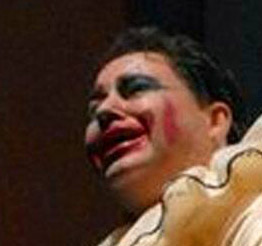
"To have seen Mr. Rodriguez in I Pag was to witness an opera moment.
I read the hype on tenor Daniel Rodriguez, Here was the Singing ‘9-11’ Cop,
and I thought, ‘yeah, yeah, we’ll see.’ After all, how good could he be?
Simply, Daniel Rodriguez’ performance was electrifying,
pure magic, pure energy, pure emotion and blazing in glory."
~Paul Joseph Walkowski, 2007 Operaonline.ns
June 2012 New York City
Chelsea Opera presents Puccini’s "Madama Butterfly"
Daniel sings role of Lt. Pinkerton
Chelsea Opera presents Puccini’s "Madama Butterfly"
Daniel sings role of Lt. Pinkerton
Tenor
Daniel Rodriguez has had so much build-up in the last decade
that it was refreshing to actually see him on stage.
The Brooklyn native is best known for his transition from the
New York Police Department to a recording career and tutelage from
Plácido Domingo. His teacher's influence was audible: a dark,
slightly baritonal tenor. It rang out with spinto power in the big, heroic
moments, although the gentle seduction of Butterfly didn't have much
in the way of subtlety. For once, the added Act III aria did not
seem superfluous, but an expression of genuine heartbreak.
~ Paul J. Pelkonen
that it was refreshing to actually see him on stage.
The Brooklyn native is best known for his transition from the
New York Police Department to a recording career and tutelage from
Plácido Domingo. His teacher's influence was audible: a dark,
slightly baritonal tenor. It rang out with spinto power in the big, heroic
moments, although the gentle seduction of Butterfly didn't have much
in the way of subtlety. For once, the added Act III aria did not
seem superfluous, but an expression of genuine heartbreak.
~ Paul J. Pelkonen
“It is as if Puccini had written the role for Dan. He sounds glorious in it.”
~Maestro Carmine Aufiero.
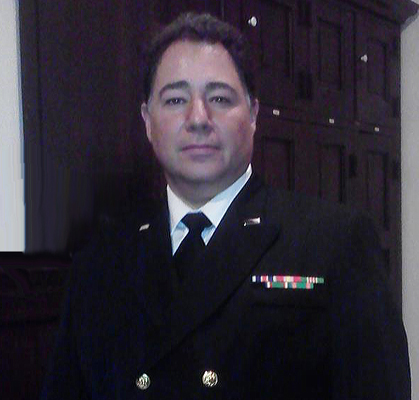
Performance photos
http://www.chelseaopera.org/butterfly.html
Chelsea Opera concludes season eight with Giacomo Puccini’s most beloved opera,
"Madama Butterfly," and welcomes back tenor Daniel Rodriguez in the role of Lt. Pinkerton.
Rodriguez made his opera debut in Chelsea Opera’s 2006
production of "Pagliacci," which The New York Times wrote,
“Mr. Rodriguez has a real voice: beefy, husky, with baritonal colorings."
Early rehearsal
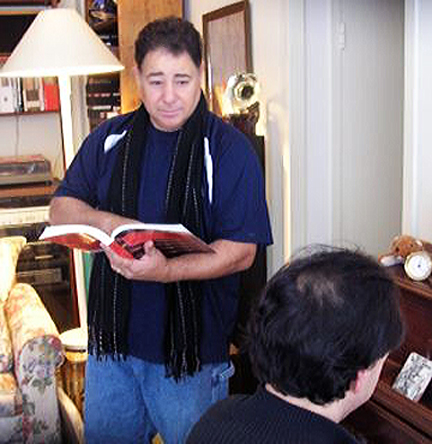
Photo compliments Chelsea Opera
Photo compliments Chelsea Opera
2008: Opera of the Hamptons presents
Daniel Rodriguez as Turridu in Cavalleria Rusticana
Tenor Daniel Rodriguez, remembered well as the NYPD Singing Policeman,
is the star of this thrilling drama and is singing the role of Turridu.
With the encouragement of Placido Domingo, he is pursuing an
operatic career, as well as singing all over the world.
We are very excited to present this remarkable tenor.
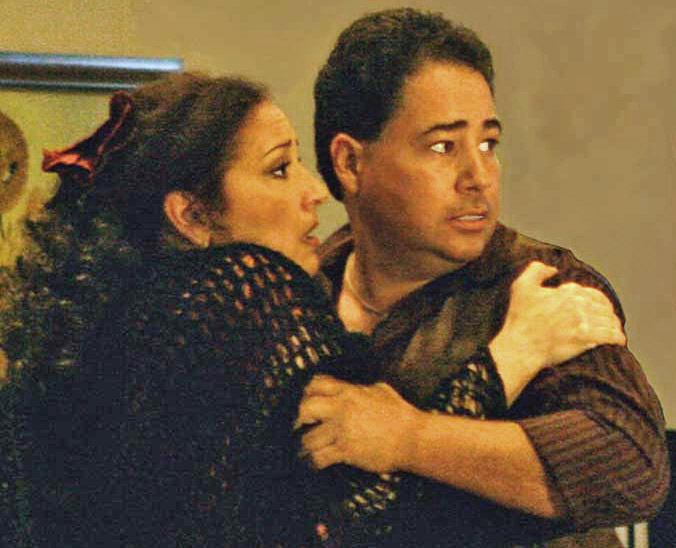
Cristina Fontanelli and Daniel Rodriguez, photo by shiradevra.com
It is not often that we have the chance to experience what Placido Domingo describes as,
"A beautiful tenor voice and a source of joy to me'. Daniel has also been referred to by
a leading conductor as a 'possible natural successor to Carreras, Domingo and Pavarotti,
if he decides to focus on an operatic career." ~Ray Bradbrook
Daniel Rodriguez as Turridu in Cavalleria Rusticana
Tenor Daniel Rodriguez, remembered well as the NYPD Singing Policeman,
is the star of this thrilling drama and is singing the role of Turridu.
With the encouragement of Placido Domingo, he is pursuing an
operatic career, as well as singing all over the world.
We are very excited to present this remarkable tenor.
Cristina Fontanelli and Daniel Rodriguez, photo by shiradevra.com
It is not often that we have the chance to experience what Placido Domingo describes as,
"A beautiful tenor voice and a source of joy to me'. Daniel has also been referred to by
a leading conductor as a 'possible natural successor to Carreras, Domingo and Pavarotti,
if he decides to focus on an operatic career." ~Ray Bradbrook
2007: "Best performance by a Leading Male" by OperaOnline
for his portrayal of Canio with Granite State Opera
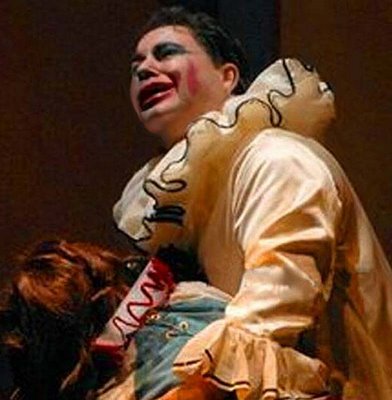
Photo courtesy of Granite State Opera Company

2006: Daniel's operatic debut as
Canio in Pagliacci with Chelsea Opera
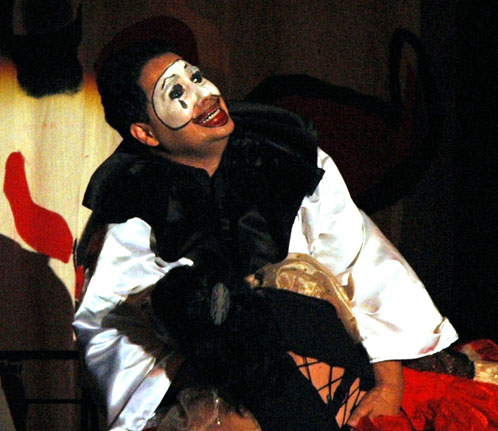
Daniel's opera debut , Photo credit Rick Stockwell
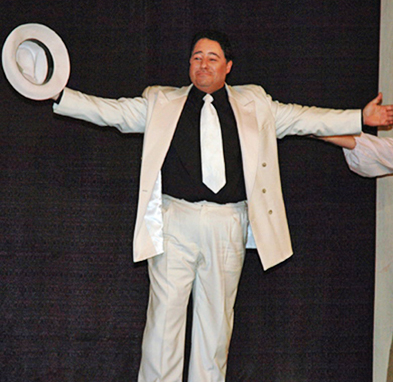
Photo credit Rick Stockwell
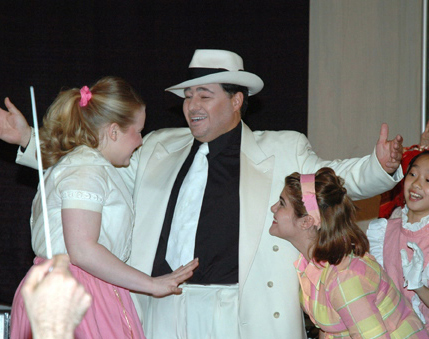
Photo credit Rick Stockwell
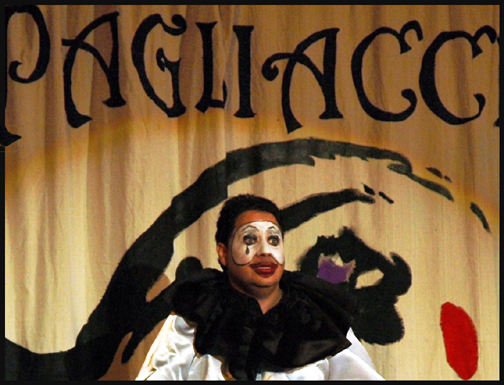
Photo credit Rick Stockwell
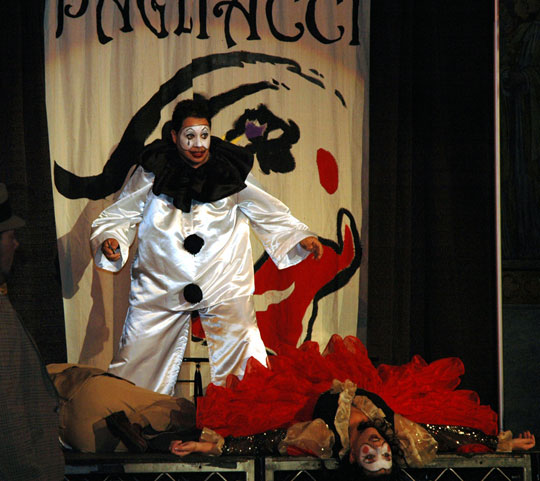
Maryann Mootos as Nedda, Photo credit Rick Stockwell
"In the days since his abortive, two-note audition at the famously crusty Metropolitan
Opera, he has proven that he has a voice and can use it to passionate effect.
He can readily display it as Canio, whose music is histrionic and flashy."
~Clive on at the Villager.

New York Times review by Anthony Tommasini
"Impossible not to respond to his portrayal. When he sang the touchstone aria,
"Vesti la giubba," venting Canio's grief and humiliation, you sensed that here was
someone pouring out years of pent-up artistic longing."
Anthony Tommasini, New York Times reviewer
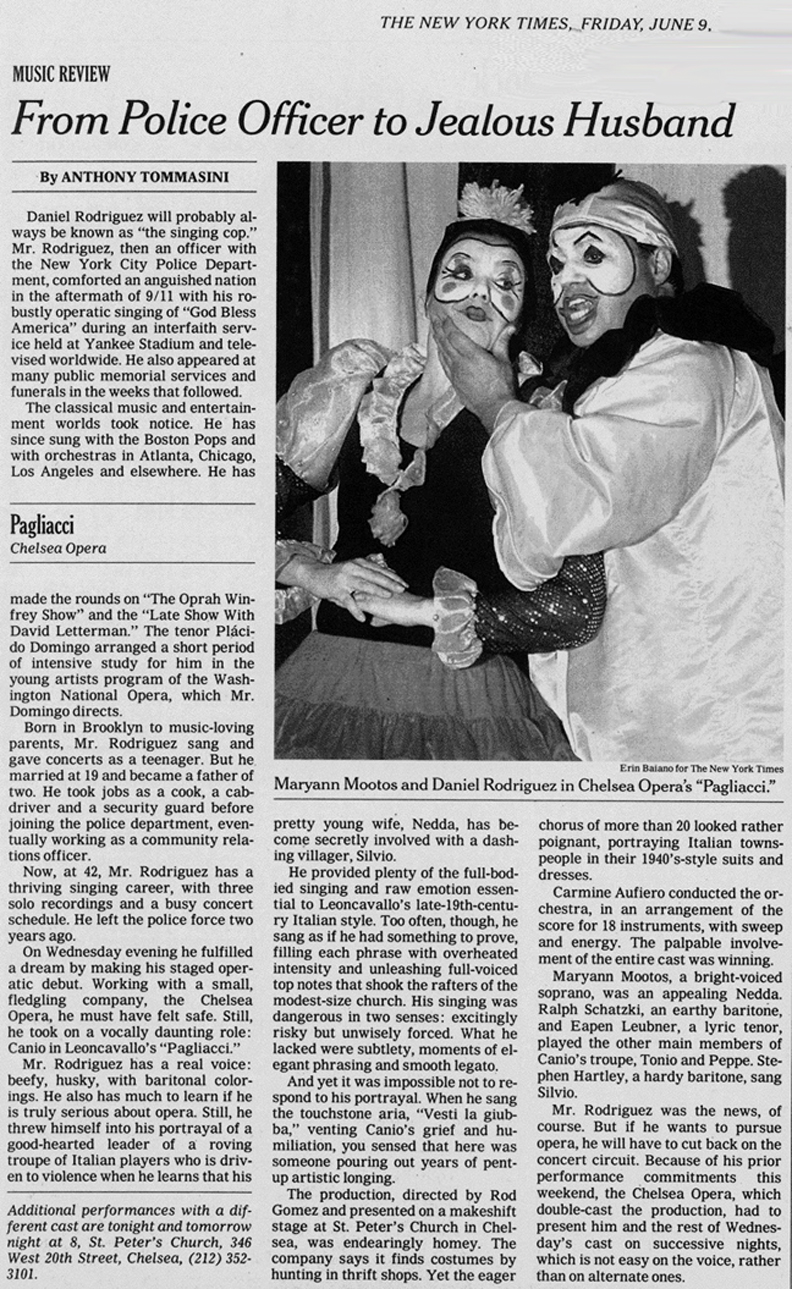
"Vesti la giubba," venting Canio's grief and humiliation, you sensed that here was
someone pouring out years of pent-up artistic longing."
Anthony Tommasini, New York Times reviewer
